Barradale Farm: Permaculture

Showing posts with label Permaculture. Show all posts

Designing a property using permaculture principles

Recently I finished a permaculture course with David Holmgren and Beck Lowe over at Melliodora and I thought I would share some of the processes that went into our permaculture property plan. Some of the people in my class did beautiful artistic and very professional design plans on their computers, but alas that is not my skill set. Mine is somewhat rudimentary, but it does the job.  


If you have a larger property it is easy to want to jump in and do all the things. But that approach is often not the most sustainable. Doing anything fast usually requires a massive amount of resources and it is also incredibly hard work which brings with it high levels of stress. To me, sustainability is not only about what materials we use and how we consume, but it needs to take into consideration the personal cost.

I remember several years ago listening to a podcast that interviewed Mathew Evans from Fat Pig Farm. He talked about an area in Tasmania that was attractive to people wanting to live a sustainable and self-sufficient life. They would come full of passion to grow and raise all their own food while stepping lightly on the earth. They had such beautiful and noble goals, but several years later they would often end up burnt out and separating. The pressure and exhaustion of trying to do it all have taken an irreversible toll on their family life. This story stuck with me and serves as a reminder that living sustainably is not only about caring for the earth, but it's also about making choices that are sustainable for us emotionally, physically and relationally.

What is Permaculture? 

Permaculture is a set of twelve design principles created to help guide people to live well on the earth with a focus on caring for the earth, sharing the earth's resources and while also caring for people. Permaculture is a movement that came about in the 70's through the passion and wisdom of Bill Mollison and David Holmgren. 


Permaculture is about more than gardening. The permaculture movement is incredibly broad and whether you are old, young, single, a couple, have a family, renting, live in the city, live in the suburbs, are on a property or travelling around the country there will be permaculture design elements you can apply to your life. 

There is something for everyone, in all seasons of life. 

Permaculture encourages us to consider the life we want to live and filter the choices we make through a process that helps us to be better connected to the earth, what resources our choices will require and how to connect to our community in a meaningful and authentic way.  

You can download free-to-use free to use graphics and find out more about permaculture HERE
One of the great things about permaculture is people all over the world are living out the 'people care' aspect and there is an abundance of reading material available for free, from the library or on YouTube. 


Designing a property using permaculture design principles

Throughout the design process for our property, sustainability was a priority. Not only with the way we design the practical elements of the farm but the things we do here need to be sustainable in a practical and emotional sense too. The reality of our situation is that Grant currently works full-time off the farm. This is for several reasons. One Elsie was little and I wanted to be at home with her but two Grant is the highest earner and raising a family and setting up a farm is expensive, no matter how frugal and careful we are. If one of us has to be off the farm full time, we may as well bring as much money as possible to justify the time spent away. He also loves his job and I love being at home with the children so it works on all levels. I have also returned to part-time theological study which I can do externally with the hope of one day getting some kind of pastoral care/chaplaincy work in the future. 


Instead of trying to do it all, we focus on the things that will bring the most value to us as a family, and that which we will enjoy the most. With that in mind, my permaculture design focussed predominantly on our house paddock which is a few acres. 

Because we are busy, things can easily be overlooked so it was important to me to design the house paddock in a way that increased incidental supervision and observation. In the house paddock I wanted;
- deep litter chicken yard
- anti-avery orchard (covered to deter birds/possums)
- a shady garden for a child-friendly play space, lots of herbs, easy pick greens, pollination, relaxation
- maincrop vegetable garden
- greenhouse
- some grass for the guineapigs and for kids to play on


Stacking Functions

Stacking functions is a major design component of permaculture. How can we do things so they require the least amount of energy and resources whilst maximising the functionality? How can we ensure systems work together in a beneficial manner? 

One of the things we have done is to design the chicken yard so the chickens can access the orchard in the future and the main crop area in times of rest. The chickens can eat insects, scratch up the soil, eat rotten fruit etc which is great for the chickens, the soil and the fruit trees. 

Current site plan of our yurt site. 

This is our current house paddock design. Prior to this winter, there was very little garden, it was mostly mowed pasture with a couple of garden beds. I had tried to garden in the past but it took us a few goes to get the design right. Each failure brought us closer to understanding what we wanted and what would work for our family. Over winter we were busy bringing in rocks from around the property to create garden beds and then each fortnight bringing in either a load of compost or gravel for the paths. It has been a slow and steady process done as finances have allowed. We wanted curved paths and stepping stones so as the garden matured it would feel a bit wild and magical for the children. So the children would be drawn into the garden and really want to explore it. 


Long term permaculture garden plan

Along the southern fence there is a wormwood hedge which has natural flea and parasite-repelling properties, because it will grow through the fence the chickens and the goats can help themselves. I can also easily harvest it for chicken bedding when required. The chicken yard also shares a fence to the house yard so scraps can easily be tossed over the fence to them. 

Realistically, minimising the effort required to do a task means maximising long-term success. 

The compost area has been redesigned to utilize rodent-proof bins in the future. It is also near the gate which will be our main parking area so scraps can be taken out on the way to the car. I will probrably set up an area for compost teas here too. 

The design is very compact and interconnected to utilize incidental supervision. This is so I can keep an eye on the animals and so the dogs can patrol against possums and foxes. The dairy goat yard is close which means it is easy to keep a close eye on labouring does and newborn kids. During the day the goats are free range, and are only secured overnight. The milking shelter was a pre-existing structure on the back of the woodshed. It was built when we extended our solar system and it makes sense to utilize what we have whenever possible. It's a little low but I am only short and sit down to milk so it works well for me. 

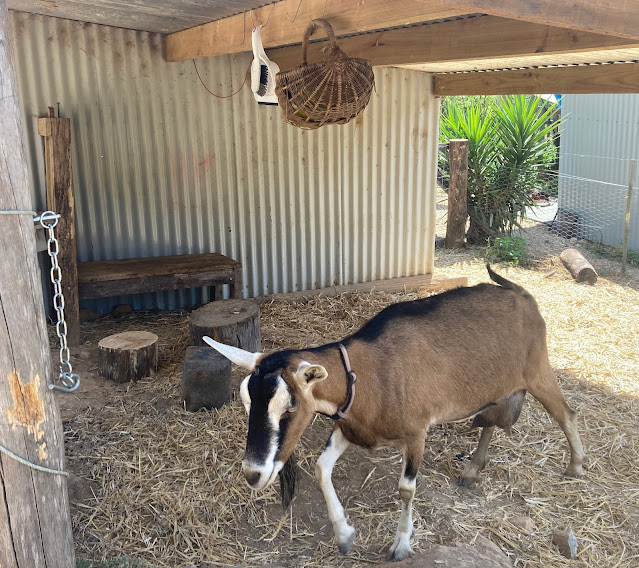
Hoopla in her milking shed, trying to push past me so she can forage.

Good fresh milk from Hoopla.

Retrofitting the yurt

Initially, when we bought the farm, we intended the yurt to be a short-term home for our family, with the long-term plan to build a home on the north-facing slope, which from a permaculture design sense is probably the better site. We then intended to rent the yurt out as a farm stay experience, to host  WWOOFers in it and for interstate friends/family to stay in who sometimes visit for a week or two.  

However, due to the current economic and political environment, we have decided to extend the yurt, utilizing recycled materials where possible. We will then retrofit the yurt into a more energy-efficient and fire-resistant building, leaving the north-facing hill as pasture for livestock for the foreseeable future. 

The pros to the yurt position are that it’s well-placed for bushfire resilience at the bottom of a valley near a permanent creek.  As we are off-grid this area gets more shade which is particularly desirable in our hot climate. The shade is more valuable to us in summer than the extra sun in winter, as we have an abundance of wood in our forest for the wood oven in winter. Keeping cool is significantly harder due to only having a small solar system. We can gravity feed our water to the yurt utilizing the western hill and there is flatter ground on the yurt site which is easier for gardening. 

In hindsight, would we choose a yurt? I’m not sure. It is certainly not the best “permaculture design building” around by a long mile. 

But, we were a family of then 5 who moved 2000kms away from home and couldn’t afford to rent a house for the duration a build would take. We needed a home fast on an incredibly small budget.  After camping for 4 months, I didn’t have the emotional bandwidth left to tackle a slow DIY natural build. We chose a yurt because it is essentially a timber-framed building that can be clad in timber or perhaps plastered at a later date. Though the circular shape does make that a little more challenging, it is commonly done.   


Other permaculture thoughts...

I have done an extensive, property plan including fencing plans, water plans, bushfire resilience and more, but it might be a bit long to share here! 

If you are interested in permaculture, I'll pop some links below of some excellent places to start though there are many more. These are challenging times and becoming better connected to your local community, utilising community resources and building up household resilience and sufficiency are all good things. 


Much love,
Emma 
xx
6

Choosing a home dairy animal

One of the most important questions we have found when building our homestead from scratch is "What is of high value to us?" 

There are so many ways we could tackle this property. We could focus on the farm side working on fencelines, improving genetics, improving pasture etc. We could work on the ecological side of regenerating creeklines and getting rid of weeds. I could raise and preserve all our fruit and vegetables. I could sew and knit all our own clothes and household items, and I could become a cheesemaker. Every one of these is a good and worthy avenue to pursue and master. Hopefully, eventually, I will tackle all of these things in one form or another. 

But not necessarily all at once. 

One of the things I wanted when we moved here was a dairy animal. To provide our family with nutrient-dense, quality raw milk. It is very difficult to buy raw milk in Australia as there are strict laws and large fines around it. There are ways to skirt these by cow sharing, but to do that you need to have people around you doing a cow share program. We looked into getting a Jersey x dairy cow, but I faltered knowing dealing with the sheer volume of milk day after day, week after week was likely going to be more than I could handle. Our family uses about 3L of milk daily; a dairy cow might as much as 10-20L/day in their peak milk production, even when calf sharing. We don't have the solar to support a second fridge needed to cool and store that volume of milk, nor the space to have a specially dedicated cheese storage fridge in the yurt. 

Instead, we settled on a dairy goat. 


Her name is Hoopla and she is a British Alpine. 

We actually got two goats initially but they escaped into the bush. It was a huge blow and I was a teary mess and riddled with guilt over making a mistake that lost them in the first place. I was blessed that their old owner Sandra visited and helped me look for them, kindly sharing her similar goat-keeping woes over the years and reassuring me with similar stories. Thankfully we managed to get Hoopla back. Hopefully, Mona has found herself a new home with a farmer somewhere way over the ridge.    

Goats are highly social animals and should always be with at least one other goat, so Hoopla goes and visits with the Boer goats when she needs company. To be honest she prefers to be near the house and us with the two border collies. But she is due to kid at the end of the month, and then she will have her babies to keep her company. We are also on the lookout for a second British Alpine, I would love one from her old flock as her breeder Sandra is a wonderful woman who cares deeply about her herd of dairy goats. She makes beautiful goat's milk soap and you can find her at Mountain Goat Soap. I have found her products to be very gentle and nourishing, especially on sensitive skin and hair. 


Time/energy

We settled on a dairy goat rather than a dairy cow for various reasons. Firstly the volume of milk suits our needs and current yurt living situation perfectly. We should have enough fresh milk to keep us in milk, yoghurt and a little fresh cottage cheese/ricotta almost perfectly. And frankly, that is about all the time I will have to spend on preserving dairy products. If there comes a time I want to delve more deeply into cheese making I can always milk a second doe, but whether I milk one or two goats can fluctuate in response to the season we are in. Feeding and tending to Hoopla takes about 30 minutes a day when she is in milk. 

She is due to kid at the end of the month so I am currently not milking. But I have just started getting her used to the stand again. While she is eating her dairy meal I brush her, pat her all over, talk to her and run my hand over her udder and teats so she is used to the routine and is relaxed and confident when milking time comes around. 

Health benefits

Goat milk is incredibly nutrient-dense. Goat milk is naturally A2, which many people find easier to digest. It is lower in lactose than cow's milk as well as being naturally homogenized and gentler on the tummy. It is higher in protein and it contains more vitamins and minerals than cow's milk too.  

Nearly all baby animals can tolerate goat's milk, without scouring which is a testament to its digestibility. Many babies who cannot tolerate cow's milk can tolerate goat milk, and those with eczema often find goat's milk reduces their flair-ups, both when consumed or applied to the skin in the form of soap or creams. When we first got Hoopla she was in milk and we all found we felt better drinking her fresh milk. Especially Grant who drank goat milk as a child due to health issues. 

Size

A goat is significantly smaller than a cow, and as a 5"3 woman, I can easily handle a goat. If she startles or missteps she is not likely to hurt me badly, which was a consideration due to living remotely with limited phone reception when away from the yurt. I am confident handling goats, I am less confident handling cows. 

Taste

Raw, fresh goat's milk is a different product than what you can buy from the supermarket. It is mild and creamy in taste. Goat milk cheese is delicious and has a wonderful bite to it due to its unique combination of fatty acids, which makes it quite sought after. Though currently, I do not want to delve too deeply into cheese making due to time, energy and space constraints, it is certainly something I look forward to exploring in the future once we have expanded the yurt. 


Feed

Goats are diverse browsers, meaning they do well on a combination of pasture and woody weeds. In this season of climate change and the prediction that we will experience longer droughts and more extreme temperature changes, it makes sense on our property to have goats as they can utilize both the pasture and the bounty of woody weeds which they love. This gives us added climate and food source resilience. 

Though we don't generally supplement our boer goats feed, we do give Hoopla a mix of dairy meal twice daily and add we add in lucerne hay when she is in milk to increase her butter fat content. But a pair of dairy goats will eat significantly less than a dairy cow which is a financial benefit too, as well as being easier to manage in drought or for those on a smaller property.

Incorporating into our systems

When bringing an animal onto a property, whether it be large animals like a pig, cow, or goat or small ones like chickens, rabbits and guinea pigs it is important to consider how they will interact with the local landscape. Some questions to consider might be....Is your climate suitable for the breed, can you buy the necessary feed locally for a good price? Does the animal interact with your landscape and other animals in a positive and beneficial manner? How many kms will the food they require travel from the source of production to you? Can you grow the majority of the food the animal needs yourself? How will you deal with their waste products to gain the most benefit from them? What kind of fencing and infrastructure will they require? 

Perhaps the most important question is; Do you realistically have the time, energy and resources to ensure the animal is looked after the way it deserves to be? Ie can your goat/cow/whatever freely undertake all the natural behaviours that are inherent to its species like running, climbing, browsing, moving freely, socializing, sleeping and escaping the elements. 

Costs

A goat is cheaper than a cow. Hoopla was a well-bred, proven, fully-trained dairy goat and she cost us around $450. Mona the goat we lost was about $500. Similarly, a fully trained, quality dairy cow might cost around $2000+ Goats are easy to transport to the vet in a time of sickness. We can lay a tarp in the back of the car and drive a sick goat to the vet if necessary, avoiding the call-out fee which is often necessary with a large animal like a cow. They are often easier to treat due to their smaller size. Goats cost less to feed and require smaller doses of medication when unwell. 

Logistics

In our situation, a dairy goat makes sense logistically, not only due to the kind of land we have but also because we are already keeping Boer goats. When our dairy goat is in season and ready to be bred, she can go and visit our boer billy goat. We don't need to worry about finding a bull, buying semen or getting someone in to artificially inseminate our dairy animal like we would with a dairy cow. Logistically that makes keeping goats for milk significantly easier, and cheaper too. 

Space

Though space isn't an issue for us, a dairy goat can be kept in a smaller space than that which is required for a cow. Hannah Molony from Good Life Permaculture has a wonderful video about urban goat keeping which she does at her suburban Tasmanian home you can check out HERE. But the benefit for us is that we can keep our dairy goats in our house paddock, which works in beautifully with our more intensive growing systems. 


And finally....

When choosing things to do on your property whether you have a big or small place, enjoyment and pleasure and passion should certainly be a consideration in anything you add or bring onto the property if you want it to be a sustainable venture both emotionally and in a practical sense. I love goats. They are my favourite farm animals to date. They are funny and full of character, and I am confident and enjoy being around them. For us, having a goat for fresh milk makes sense for our property, in this season and with the time and energy I have to invest into milking. 

We are more likely to get the most out of the things we enjoy doing and to do them to the best of our ability which maximises the return on every level. For example, if we hate kale, we are not going to nurture it to get the best yield. It would be better to use the time, space and resources to grow something we love to eat. (I am just using kale as an example, I actually love kale! But it seems to be a somewhat divisive vegetable)

It's the same with a dairy animal. 

Just because someone else keeps a dairy animal and you like the idea of it, it doesn't mean it is the right choice for you in this season. Be realistic about your time, energy and resources in the season you are in, not the season you wish you were in. Only you can decide what is of high value to you in this season, remembering we all walk to the beat of our own drum.  

Much love,
Emma
xx


2

Building a permaculture garden and a new season

Hello there! 

It's been a bit since I have popped in, and I apologise. We got into a rut at our place.  Progress and projects seemed to crawl along, and everything felt like a struggle. It happens to us all, but the important thing is to remember it is only a season, and that we can pull ourselves out of it. Especially with good family and friends around us. 

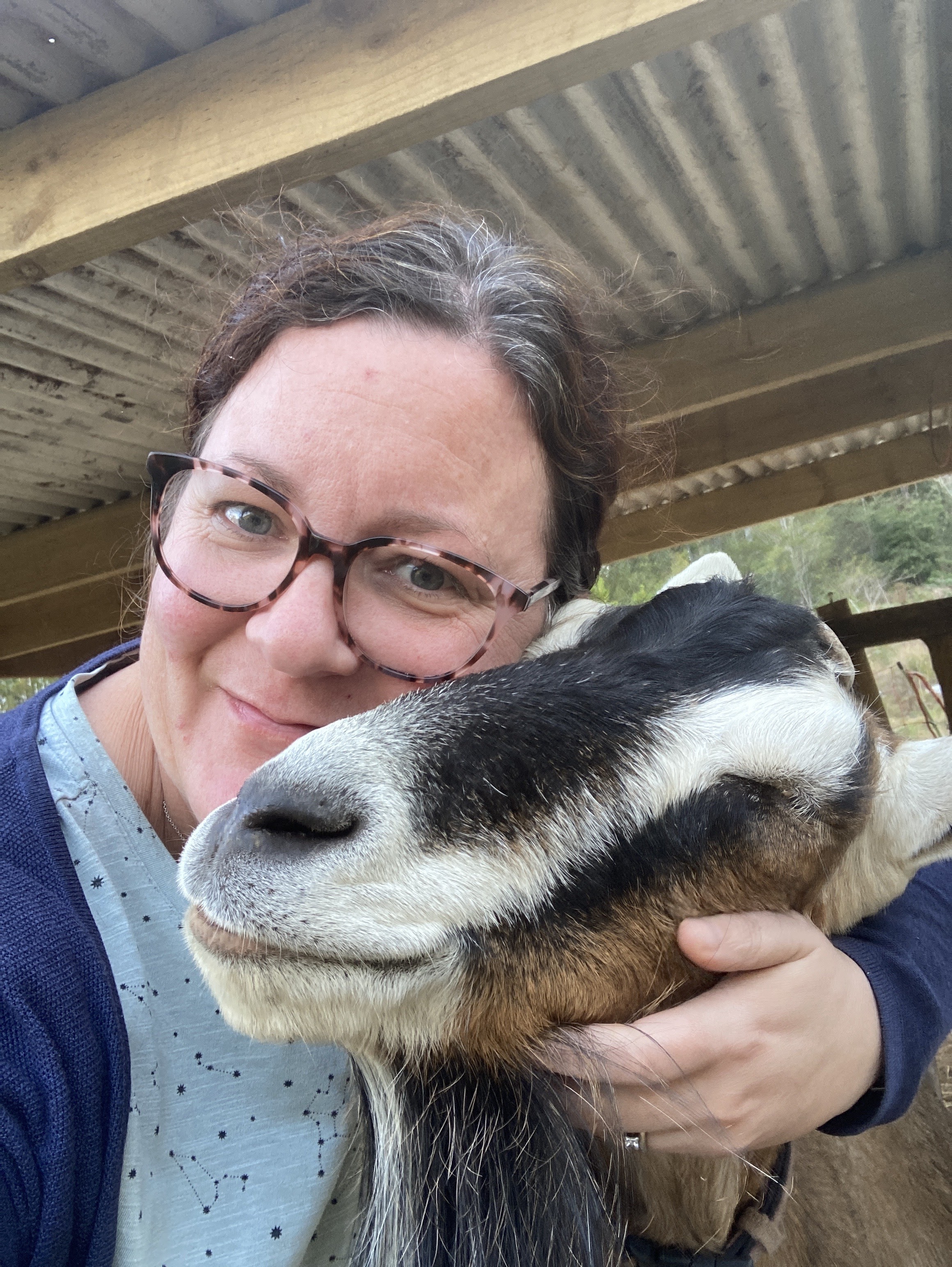
This is Hoopla our British alpine dairy goat, just popping in to say hello too. 

Back in May, I started a permaculture course with David Holmgren and Beck Lowe through Melliodora and it's been wonderful to connect with like-minded people all over Australia and the world. I'm nearing the end of it now and it has helped to clarify a priorities list and given me ways in which to talk to Grant about what is important to me. We have been tinkering with designs and working out what is of high value to us. We have been working on the yurt garden (which in a permie sense is our zone 1) over winter as it is something we could do with very little money utilizing what we have here. We have used large rocks from the farm to build garden boarders and paths, used timber logs from the forest as stepping stones and then we have been bringing in either a load of compost or gravel for the paths once a fortnight. There are still a few more loads to go, but in the meantime, we have been sowing seeds and planting seedlings in the garden spaces as they are built. We managed to find a pond and outdoor setting for free off Facebook Marketplace which has been amazing. Already there has been a huge transformation and I can't wait until it matures and fills out.  I'll be sure to share the design with you all once I have finished tinkering with it, though as gardens are always evolving, it too will no doubt change. 


One of the best things about doing the permaculture course has been the people. The teachers David and Beck are amazing, but it's been delightful being able to meet so many people on the same path. It seems like Instagram and Facebook have gotten incredibly loud with either nastiness or endless advertising of things we can't afford or are not realistic to our way of life. I miss the days when everyone was blogging and sharing their stories and pictures of their gardens cobbled together out of this and that, their projects on the go and their modest DIY housing projects. Now it seems people are either a professional interior designer or a florist! Which I know of course isn't true, it's just what the algorithms want us to see. But golly it's annoying. Rhonda Hetzel is back on her blog Down to Earth, and it was a timely reminder to share here what we have been up to. 


Turning 40, falling into a rut and my last baby suddenly seeming grown....Well, I lost myself there for a bit. We are also quite isolated on our property, primarily due to the driveway and I struggle with that. But with Grant's encouragement, I have been making a big effort to catch up with friends for coffee or dinner in town and it's brought much-needed balance to my life. I've also started attending a bible study fortnightly through our church and the people in it are wonderful. To do things just for me again after being deep in the season of mothering and our 4th baby has indeed been a blessing. 

But with spring at our doorstep, it seems like a new season is here in my life too. Having broken the back of the yurt-yard garden, I've been reminded of the potential this somewhat wild property holds. 

The next job to tackle will be to build a new chook yard, expand our flock and then we will focus all our energy on starting the deck. We have decided that aside from the odd day on 'can't be ignored' farm jobs, the undercover deck with two more bedrooms, a small bathroom and a summer kitchen needs to be our absolute priority. For the sake of everyone's sanity. The boys are getting bigger and I have resumed theological study part-time and need a quiet space to work. The yurt is a sweet little home but it is not quiet, nor spacious. 

This introvert needs a quiet nook all of her own! 


Well, I'll keep today's post short as I have things I need to get stuck into study-wise. But it's good to touch base with you all and I apologise it's been a while! But all is well in our little corner of the world, how are things with you? 

Much love,
Emma
xx


16

Long term garden plans, mistakes and reflections

I have found summer gardening on our farm really hard. The pests wanting to eat my veggies were relentless. Recently I ripped out my leafy greens as they had been decimated. Unless I used commercial sprays, the situation was beyond salvageable. I certainly didn't want to risk planting new seedlings until the situation was rectified. So for now, I am focussing on extending our range of edible and medicinal herbs. Thankfully I still have some nice-looking cherry tomatoes free from damage. It would certainly be a sad summer in the garden without homegrown tomatoes. 

Recently we have been drawing up and considering a long-term home/garden plan, utilizing all we have learned over the past couple of seasons. 

The pond is now in, though we need to backfill it with gravel to make it safe for Elsie as it's a little deep. We are beginning to collect rocks to put around the edges to settle it into its surroundings, as well as provide habitat to frogs and other small animals. 


Elsies Garden
Elsie's garden is the small garden near the door. It's where her cubby house and sandpit are and it's a safe area for her to play which can be easily supervised. There is an old galvanised tub there for waterplay too. 

Last summer we planted a large cutting from a frangipani and though it did well in summer, it didn't survive our hard winter frosts despite being planted in a protected area. I have replaced it with a magnolia because I love them with their furry leaves and striking flowers. I have been planting more herbs as well as some cottage flowers like lavender, cosmos, foxglove, salvia and diosmas for colour. It's a great place for herbs being near the kitchen door.  

Some of the herbs in there are chamomile, basil, perennial basil, parsley, Vietnamese mint, lavender, peppermint, (in a corner it can't escape easily) lemon balm, echinacea, spring onion, oregano, different varieties of thyme, sage, cherry tomatoes that self-seeded and elderberry. I may have missed some mind you. 

There is also a crepe myrtle, gardenia and a few other bits and bobs tucked throughout. It is a pretty, cool and shady place.


Round garden
The round garden has been mostly cleared of annuals and with just the perennials remaining. Grant opened it up and is extending the fence to the yurt, continuing with recycled timber pickets. This fence will divide the yard in two so the dogs will have one section when they are not free ranging on the farm. Aggie likes to be with us mostly and is currently sleeping under the bed so she won't mind a smaller yard. 

Gardening with dogs can be tricky and though there are many great examples of people managing a garden and dogs, I find it easier and cleaner to have them separate. Aggie especially loves to dig in any freshly laid manure or compost with no regard to new plants I may have planted. She will even dig in raised beds much to my dismay. Her legs may be stumpy but she doesn't let that hold her back...

Once the fence is done, I will relocate the remaining perennials from the round garden to the pond garden. Then top up the round garden with manure and compost before planting it out again with leafy greens and veggies. Being careful to net everything thoroughly. I have found having flowers in among veggies tricky to manage, though it looks pretty. 

The new pond will be surrounded by a large garden that includes the mulberry tree. That garden will be a cottage-style garden with flowers, herbs and pretty grasses. With perhaps some space and steppers around the mulberry to make accessing it easier. 

I'm thinking of planting agapanthus along the bottom fence line as I have heard stories of them helping to create a lush green boundary line which helps with property protection during bushfires. Agapanthus don't burn easily. Also, a mass of Agapanthus in flower is a beautiful sight. I have a love for colourful old-fashioned plants 

I will be adding several more silver birch trees to the one we have, it looks lonely. Silver birch seems to be a tree that needs friends, they are so pretty. A small stand of silver birth will also provide some much-needed dappled shade. Right now a lot of the garden is in full sun which is hot and not nice to be in. 

Along the fence on the right side of the yard we have started a wormwood hedge. The prunings of wormwood can be put in the chickens' nesting boxes and fed to the goats to aid natural worm prevention. I hope to complete the hedge right down the side by striking cuttings once the plants are a bit bigger. We did have some wormwood planted in the past but Will mowed over them.....There is always a risk when you get kids to help out. Though he managed to not mow over my second elderberry yet so I'm very impressed. 

The pond was a free find on Facebook marketplace, It's in, but needs gravel and rocks to make it look like it belongs. 

The round garden has been opened up, where the gate is will be where the staircase from the deck will go, once the deck is built that gate will be moved elsewhere. We will be putting a parking area on the flat so everyone comes in via the deck which will provide a sheltered area for shoes etc to be stored. You can see what I mean in the garden plans in the first photo.

The big veggie patch
Beyond the bottom fence in the photo above will be stage 2 of the garden which will consist of the orchard, a greenhouse and a big veggie patch. We hope to start on that in the second half of the year. For now, the internal yard is the priority. I'm hoping that increasing the biodiversity with flowers and herbs will attract more predatory insects into my garden and provide more balance. I also want to create a pretty, peaceful and lovely garden for our family. 

Some people might feel it's more essential to get a productive garden up and going before an ornamental one and for them, it might be. But I am at a point where I need some gentleness. I am more confident in my cottage gardening skills than I am in my veggie growing skills. Since moving here our entire lives have consisted of chores and essential jobs. I am confident that once I find joy again in gardening for fun, the desire to garden for food will return soon after. The round garden will be filled with veggies in the meantime again once my seeds are established. 


New chook run
While free-ranging chickens are idyllic, ours are naughty and don't give us any eggs when we let them free-range on a permanent basis. And we really like eggs.

We are going to build a permanent chook run that will run parallel to the veggie garden. That way we can throw the green waste over the fence for them to tun into compost as well as let them in the veggie garden and the orchard to help manage pests and turn over the soil if we want. As we move forward we want to utilise the chooks as a form of composting more than we currently are.  

The importance of good planning
It's good to have a clear long-term plan as we continue to chip away at all that has to be done here. A plan helps bring motivation by providing a picture of how things could be. It ensures everyone is on the same page and has similar priorities. When undertaking a major lifestyle change like we have, that is really important. 

Many people give up on their homesteading dreams after the first few years due to the sheer amount of work they find needs to be done. For us this homesteading journey is the way we want to live our lives long-term, there is no need to try and do it all once. We have made mistakes that wasted time and money by rushing into things before we were ready. 

It's a sobering lesson. 

But due to our mistakes have learnt how to hold back and to embrace the practice of patience by watching, assessing and re-assessing what we are doing and how we are doing. We have learnt how to prioritise what needs to be done and what we value rather than wildly following our homestead dreams.  

If homesteading is a path you dream of, there will always be something interesting to tackle. Today Grant is hanging a light over the kitchen table from an old shade I painted with a sample pot of blue chalk paint. Then he will be building a small shelf from recycled timber near the door to store garden tools and various bits and bobs. While he is doing that I'll get the house in order, take down the Christmas tree, tend the animals and prep tonight's dinner. After lunch we will work in the garden with the kids, I'll shuffle plants and work on the new garden around the pond while he continues to build the recycled timber fence. It's not everyone's idea of a good time, but I really enjoy working side-by-side. There is nothing more satisfying or rewarding to work on projects where you get to see and experience the progress you make. 

And for me, creating a nourishing home and garden where our family enjoys being together is the most valuable project of all.  

Much love,
Emma
xx 


7

Gardening in small spaces and weekend links

Though we have a farm, our current growing spaces are quite small. Currently, we have two seperate patches and a couple of small raised beds. It is surprising how many plants you can fit in a small space, and just how much food you can get from them. It's easy to dismiss a small space as useless or not worth the effort, but if you want a garden you'll make it work. Sometimes we need to work with what we have, rather than what we want.

This is the small space we call Elsie's garden. It's about the same size as a courtyard at around 10m2. Though it's small there are a lot of plants there, and an example of what can be done in a small space. It is pretty with flowers and decorative trees as well as lots of edibles. 

We attempted a big veggie garden two years ago but Elsie was tiny, I was home-educating three children and we had broken pasture that kept trying to take the freshly exposed ground back. Then Grant got a different job taking him away from home more. In the end, we let it go knowing there would be another season, and that all good things take time. 

This area at the front of the yurt is what we call 'Elsies garden' It's home to her little cubby and sandpit while being a safe and secure place for her to play. It isn't a big area at about 10m2, but I think a good example of what can be done with a small yard or courtyard. The cubby could easily be the footprint of a small garden shed and the sandpit area is enough space for a small paved area with a cafe-style table and chairs. If you have a small space and children be encouraged, you can still create a lovely, interesting and natural play space for them. It doesn't need to be big.  


If you have a small garden, don't be afraid to use medium-sized deciduous trees. In this little space, I have a crepe myrtle, elderberry which I am pruning up, and frangipani, which didn't make it through winter. I'll be pulling it out and replacing it with a pink magnolia which I have seen a lot of around here. It's always good to have a sticky beak about what others are growing nearby. I also have a beautiful gardenia in one corner. You could easily plant a couple of deciduous fruit trees like a peach, plum or apricot to maximise your productivity if that's what you wanted. By using small-medium trees you add interest upwards and create a microclimate under them which can support a wider diversity of plants. Celery, coriander and lettuce for example don't mind some shade in the middle of a hot summer's day. The good thing about deciduous trees is they let in the sunshine over colder months. 

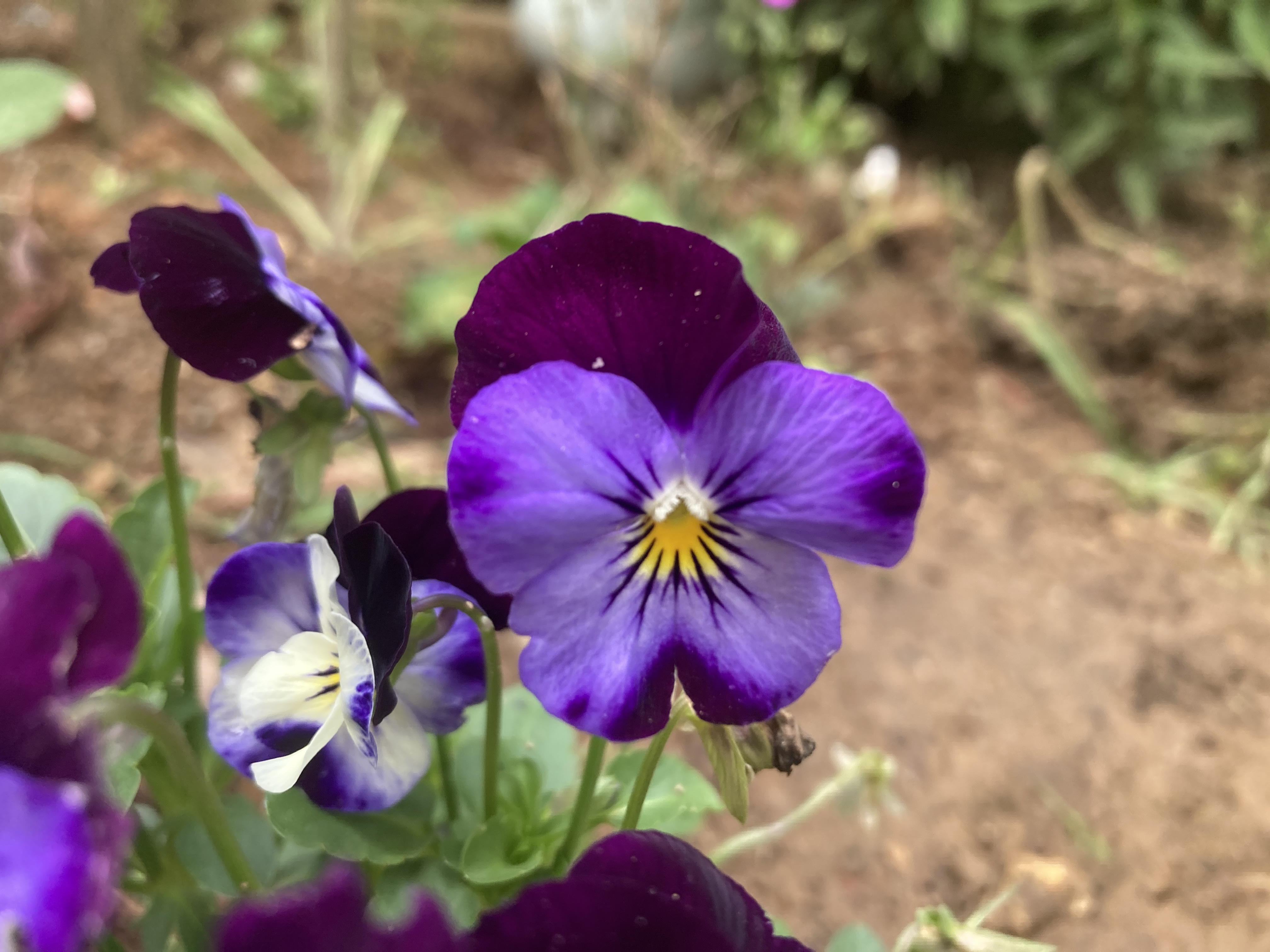
Along with the decorative shrubs and trees, in this small garden there is kale, chard, spinach, celery, spring onions, lettuce, edible violets, cherry tomato, snow peas, perennial basil, horseradish, parsley, oregano, lavender, echinacea, sage, thyme, pyrethrum and citronella geranium. Along with seaside daisies, diosmas, salvia, African daisy, native orchid, petunias and foxgloves just because they are pretty as well as helping with diversity.  


Freshly planted seedlings. Spring onions and silverbeet.

This small space is constantly changing and evolving as things come to the end of their cycle and other plants are brought in to fill the gaps. As one area is cleared out, I top it up with fresh compost and aged manure before planting it out again with a couple of punnets of seedlings. If you have a small area, it's easy to buy compost and manure by the bag from your local garden centre. Just check your prices as it can differ wildly.

In the photo above I had just pulled out parsley that had died off and some lettuces which had gone to seed. In their place, I planted silverbeet and spring onion. I also moved the horseradish to the back, brought in compost and moved some heirloom volunteer cherry tomatoes. Then I potted up a couple of cherry tomatoes to give to a friend over the weekend.   


We are growing closer to a time when we can either buy more raised beds or put in animal-proof fencing for a veggie plot. It has now about the third job on the list. Woo hoo! We are not sure which option we will take. Raised beds look lovely, have great drainage which is helpful given the predicted soggy summer ahead, and are excellent for growing smaller things like Asian greens, spinach, herbs, chillies and smaller plants. I really enjoy working with them as they are a clearly defined space. But putting in an animal-proof fence around what will be the big patch would allow us to plant bush tomatoes, corn, cucumber, pumpkins, sweet potato, zucchini, berries, watermelon etc. It would however require more, heavier work, but has the potential to supply us with a larger volume of food. We are undecided about which option we will pursue first. 

I'll share what is happening in my round garden which is about the same size over the coming weeks. I'm currently planting it out with cherry tomatoes, capsicum, eggplant, and chillis as well as lots of greens. 

What's growing at your place? Do you have a big yard or a little one?

I hope this finds you well, and that the flowers in bloom bring you a smile.
Much love,
Emma
xx

Weekend links


Every time we go to the community garden, all the children gorge themselves on these native raspberries. They are utterly delicious and I'm looking for some bushes to plant on the farm. If you are in the tropics or subtropics I highly recommend planting them!

YouTube - Heidi
I loved the book and the movie Heidi when I was a child, then I found it on YouTube and it was delightful watching on a rainy afternoon. 

Shannon Hayes is one of my favourite authors, especially her book Radical Homemakers. I stumbled upon this talk and really enjoyed it. 

Sophie Thompson, one of my favourite presenters on Gardening Australia makes DIY wicking beds. These are perfect if you are a bit hap-hazard with watering, growing in a backyard situation or want to grow in raised beds for mobility reasons.  

This family lives a wonderfully sustainable life. 


6
Powered by Blogger.